When You Very a Christmas Tree Do You Need to Cut the Bottom Again

A Christmas tree adorned with twinkling lights and ornaments is an essential holiday decoration. It uplifts the spirits of people during the winter and carries the refreshing scents of pine cones and spruce. However, where did this tradition of bringing giant trees into our homes and decorating them come up from?
Long before Christmas copse became an American custom, aboriginal societies worldwide brought evergreens into their homes because of their behavior nearly harsh winters. Over time, these practices transformed into the extravagant tradition that nosotros know today — but it wasn't well-received by everyone. So, how did Christmas copse become a vital part of celebrating one of winter'south biggest holidays? From evergreen boughs to huge annual ceremonies, this is how the tradition of Christmas trees started.
What Is the Meaning Backside Evergreen Trees and Plants?
Ancient cultures believed that the sun was a god who became ill every winter. Using evergreen boughs, these early societies decorated their homes to mark the commencement of the sun'due south recovery and winter's decline during the solstice. Plants and trees that remained greenish were reminders of the sunday'due south ability to create warm conditions and healthy life.
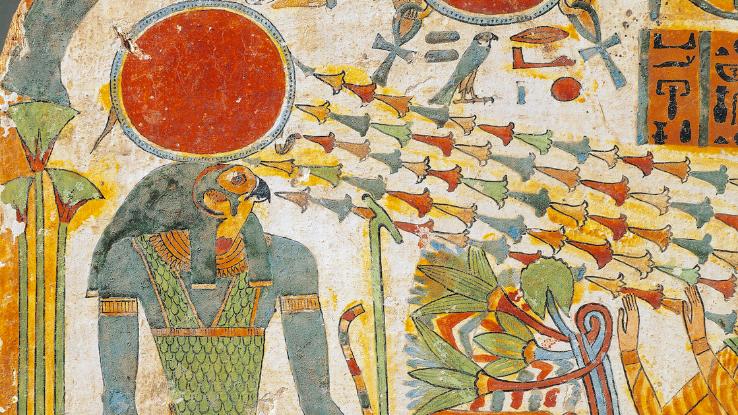
The early on Egyptians had similar views regarding their sun god, Ra, who weakened as the temperatures dropped. During the solstice, the Egyptians placed green palm rushes in their homes to symbolize Ra's triumph over death. Another civilization with the same conventionalities, the aboriginal Romans, celebrated the solstice with greenery and a banquet chosen Saturnalia, which honored Saturn — the god of agriculture. The solstice marked the return of bountiful fruits and vegetables, and the evergreen boughs the Romans displayed represented good for you crops that would soon starting time growing. Even the Vikings thought evergreen boughs were meaningful to their sun god, Balder, and, the Celts believed evergreens signified everlasting life.
Placing greenery in homes and at celebrations continued in this way for centuries until the Christmas custom as we know it began taking shape in Frg.
How Did Germany Shape the Tradition of Christmas Trees?
Germany is oft credited with starting the custom of decorating Christmas trees. In the 16th century, devout Christians adorned trees with apples and nuts in their homes to represent the story of Adam and Eve. Some built Christmas pyramids fabricated of forest, adding evergreens instead of fruits and nuts when times were tough. As Christianity expanded across Europe, Christmas trees became a common feature in households.
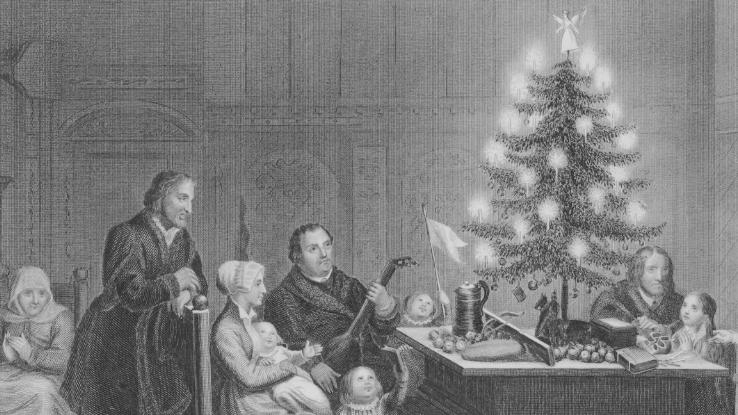
The practice of adding lights to copse is commonly attributed to protestant reformer Martin Luther. As he walked home one winter night, Luther was amazed by the stars twinkling amidst the evergreens. When he got home, he recreated the scene with a tree and candles for his family.
Despite the tradition'south widespread presence, many people didn't welcome the thought of Christmas trees.
When Did Christmas Trees Become Popular Amidst Americans?
In the 1840s, many Americans saw the European practice of decorating trees as a threat to the sanctity of Christmas when Germans immigrated to the U.S. As a effect, New England Puritans banned the hanging of decorations, calling them unacceptable pagan symbols. People who decorated in any fashion were punished.
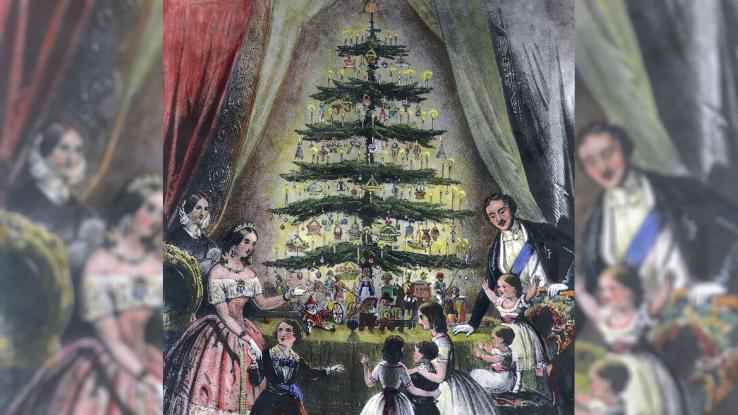
Yet, the Puritan view of holiday decorations slowly changed as many German language immigrants moved to the U.S. and spread the tradition of Christmas trees. More than Americans embraced the custom after England's Queen Victoria and her family put up a Christmas tree at Windsor Castle. The outcome was depicted in a popular publication, The Illustrated London News, in 1848, compelling Americans to believe that Christmas trees were holiday essentials.
In the 1890s, Christmas decorating in the U.S. exploded. Initially, Frg shipped ornaments to the U.S., but by the 20th century, Americans had begun decorating trees with homemade ornaments, such as popcorn and cookies. Trees made of synthetic materials also became popular.
When electricity gave rise to Christmas lights, lit trees were shortly erected in public spaces beyond the country. The custom fabricated its manner into the White House in 1923, when President Calvin Coolidge started the National Christmas Tree Lighting Anniversary. The celebratory ritual is now held every year on the northward lawn of the White House.
Bated from the White House Christmas custom, another notable ceremony is the Rockefeller Center tree lighting in New York City, which started with a unproblematic tree in 1931. Two years later, the city added lights to the tree. Today, more than 25,000 Christmas lights beautify the Kingdom of norway bandbox every year. Putting up Christmas trees at home and in public areas ultimately became an invaluable American tradition for those who celebrate the holiday.
Source: https://www.reference.com/history/what-is-the-history-christmas-trees?utm_content=params%3Ao%3D740005%26ad%3DdirN%26qo%3DserpIndex
0 Response to "When You Very a Christmas Tree Do You Need to Cut the Bottom Again"
Postar um comentário